Specification before story
Every claim — yarn count, weave construction, finish chemistry, durability — is paired with a test method (AATCC, ASTM, ISO) and a document buyers can put in front of an internal reviewer.
Standard Textile was founded in 1940 in Cincinnati, Ohio, and has stayed in continuous family ownership through the Heiman family. The page below outlines what the company makes, where it operates, and the documents a procurement team can reasonably ask for during qualification.
The business began in 1940 as a domestic textile converter serving U.S. hospitals and laundries. Over the following decades it added integrated weaving, finishing and cut-and-sew to keep institutional buyers on a single accountable supply path. The Heiman family is now in its third generation of leadership, with Gary Heiman serving as Chairman and CEO.
The company is best known for engineered bedding, towel and barrier programs sold to hotel groups, hospital systems and contract distributors. Product lines such as Centium Core sheeting and Lybro institutional textiles came out of internal R&D and remain on a continuous patent and revision cycle.
"Standard Textile is one of the few institutional textile companies that still controls the path from yarn through finished make-up under one roof."
— Hospitality procurement notes, internal RFP archive
Every claim — yarn count, weave construction, finish chemistry, durability — is paired with a test method (AATCC, ASTM, ISO) and a document buyers can put in front of an internal reviewer.
Goods are designed for industrial wash cycles measured in hundreds, not for retail wear. Wash test data, shrinkage and tensile loss curves are part of the standard sample pack.
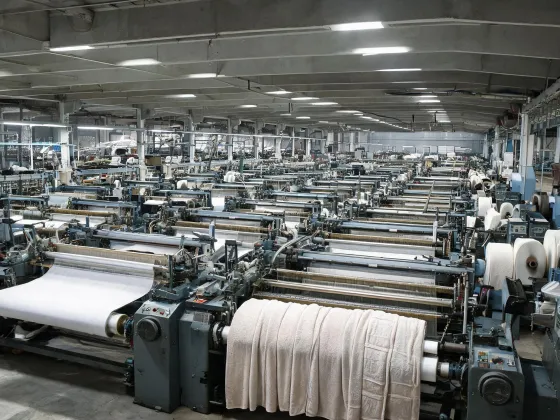
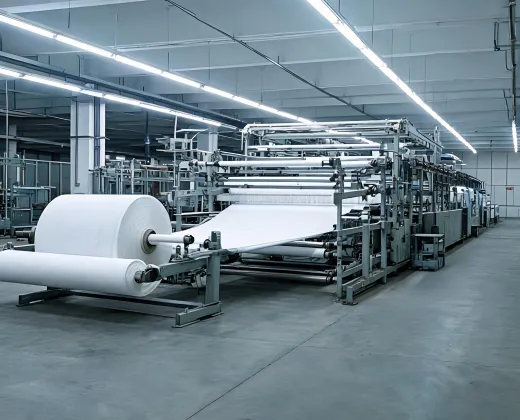
Yarn sourcing, weaving, dyeing, finishing and cut-and-sew run under one quality system. A defect or a substitution is traceable to a specific lot and shift.
Programs reference OEKO-TEX, Higg FEM and recycled-content (GRS / RCS) where the certificates are current. The team will not assert what it cannot show on a certificate face.
Institutional SKUs are kept on multi-year supply windows so existing rooms and floors can be replenished without re-spec, with overlap windows when a construction is retired.
The product mix is organised around three institutional buying paths. Each path has its own sample protocol, MOQ profile, and documentation set, and we keep them deliberately separate so a hospitality buyer is not asked to read a healthcare TDS.
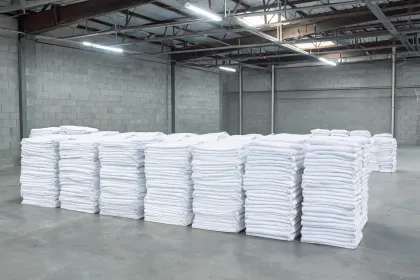
Excess hospitality and healthcare goods are routed to community hospitals, shelters and disaster-response programs through documented donation channels rather than landfilled.
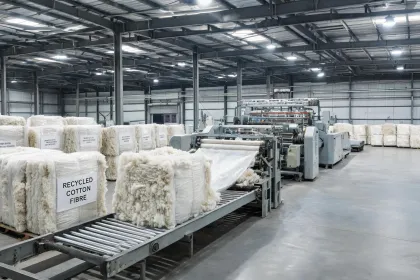
Selected sheeting and towel SKUs are spun with post-industrial recycled cotton and qualified under GRS / RCS, with chain-of-custody available on request.
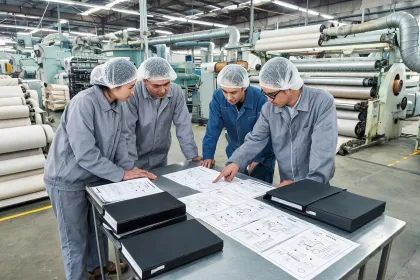
Operating sites in the U.S. and abroad run multi-year skills programs for sewers, finishers and quality inspectors so production knowledge is retained across product cycles.
Send the property type, room count or bed count, the markets you cover, and the documents your internal review needs. The reply will identify which constructions and certificates apply, and what samples are worth shipping first.